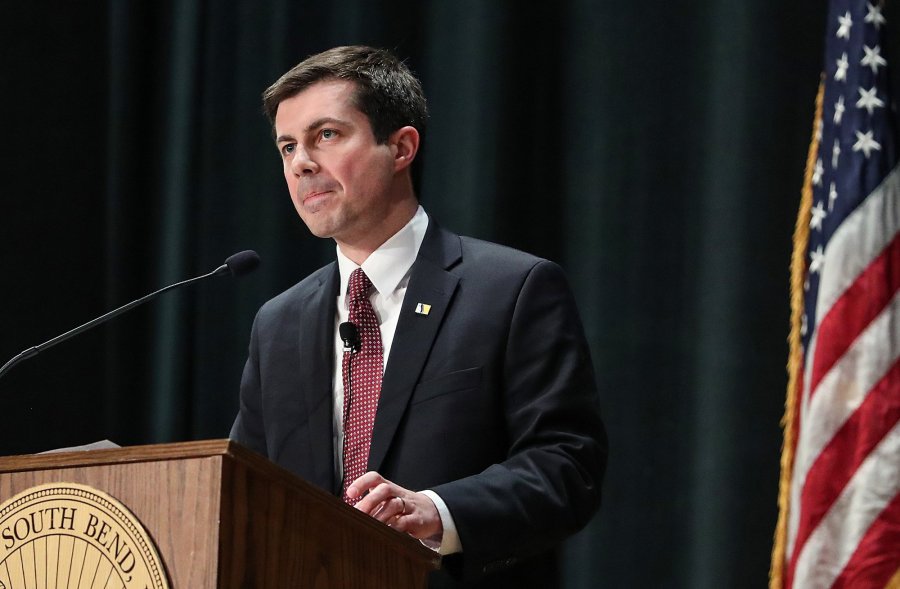
Ever since his well-received town hall two weeks ago, Pete Buttigieg’s presidential campaign has been gaining steam. If you don’t know who Buttigieg (boo-ti-jedge) is, he’s the mayor of a mid-size town called South Bend, Indiana. He’s also an openly gay veteran who recently served in Afghanistan.
I happen to have grown up just 90 minutes southeast of South Bend, and I have friends who live there. They certainly seem to like him as mayor: he won re-election in 2015 with about 80% of the vote. But being a popular mayor does not mean you’ll be a good president.
The fundamental problem with Pete Buttigieg is that he doesn’t understand the severity of the crises that we are facing as a country and as a global civilization. He doesn’t understand that radical, transformative change is needed to address climate change, rising income inequality, economic insecurity, and a deeply corrupt political system. Buttigieg talks about these issues, but his policy proposals— to the extent that he has any— are totally inadequate to address them. Here are just two examples.
He’s effectively against Medicare for All
During his CNN town hall, Pete Buttigieg said that he thinks we should “move in the direction of” Medicare for All. But he immediately backtracked, saying that we should focus on incremental reforms, like allowing people to “buy into” Medicare, rather than rapidly transitioning to a single-payer system:
The idea of a Medicare buy-in is not new. President Obama supported it as part of his initial proposal for the Affordable Care Act. But he quickly dropped the idea when it faced opposition in the Senate. Under a President Buttigieg, we have every reason to believe that the same thing would happen. By starting the negotiating process with a proposal as weak as “Medicare for all who want it,” Buttigieg concedes far too much to the right wing, and makes it more likely that no serious healthcare reforms will be passed at all.
Buttigieg has also said that, under his version of Medicare for All, private health insurance companies would still exist. He points to Medicare Advantage, which currently allows Medicare recipients to buy private insurance plans with public money, as a model. But keeping private insurers in the mix would be totally unnecessary and would simply increase overhead costs. The beauty of Medicare for All, as traditionally understood, is that it eliminates the bureaucracy of the private healthcare system and uses the immense bargaining power of the federal government to drive down costs. Buttigieg’s Medicare buy-in / Medicare Advantage proposal simply isn’t Medicare for All, and he should stop pretending that it is.
 Unlike Buttigieg, rival presidential contender Bernie Sanders understands the need for a radical overhaul of the American healthcare system. Americans deserve healthcare as a human right, provided free at the point of use. This requires completely eliminating the private healthcare industry, and establishing a single-payer system that covers everyone. Any proposal that continues to allow insurance companies to profit off of sick and dying Americans simply will not cut it.
He’s against tuition-free college
Despite being a 37 year-old millennial, Buttigieg has had very little to say on the issue of college affordability and student debt. The one interview in which he did discuss the issue was quite telling, however. Buttigieg outright opposes student debt cancellation, and makes it pretty clear that he opposes making public colleges tuition-free, too. Instead of free college, he wants to modestly increase federal aid for public universities, and make adjustments to the federal student loan forgiveness program:
“I think there should be a comprehensive strategy [on student debt], and I’m not wedded to any individual element of that. So there may be trade-offs between how generous we want to make different forgiveness programs and what we do around bankruptcy, for example… We could [also] tie these students’ share of college costs to either an income metric or an affordability metric and then make some federal aid to states in the field of education contingent on them offering that up.”
But these wonkish, incrementalist proposals are totally inadequate to address the massive college affordability and student debt crisis we are facing today. Americans are now shouldering more than $1.5 trillion in student loan debt. It’s a larger burden than credit card debt or auto loans. In the 21st century, it’s simply not possible for most people to get a decent job without a college degree— and even that is often not enough. The least we can do is provide a college education to every American for free, something that Senator Bernie Sanders has fought for for years. It’s frankly outrageous that the only millennial in the Democratic primary race does not understand this.
We need a transformational president
As we enter the third decade of the 21st century, we need a president who will fight to rapidly transition our economy toward green energy, guarantee healthcare and higher education as a right of all Americans, raise wages and reduce income inequality, end the control of Washington by corrupt special interests, and reign in the parasitic financial sector. This requires specific policy proposals and an understanding of what it will take to implement them. Buttigieg has made it clear that he has no such agenda:
Buttigieg’s “values-first” philosophy is somewhat reminiscent of Barack Obama’s 2008 presidential campaign. Obama ran on a message of “Hope and Change” that included few specific policy proposals. The result was a largely failed presidency that did not do anything to positively change the long-term political trajectory of the country. We cannot afford another Obama-style presidency. It would only strengthen the populist Right, and lead to the election of a Republican president in 2024 that makes Trump seem like a moderate. As my friend Ben Studebaker recently argued about another moderate presidential candidate, Beto O’Rourke:
“A [Buttigieg] presidency means two years of milquetoast, Obama-style reforms at maximum, followed by 2 to 6 years of right-ward drift under divided government, followed by 4-8 years of a new Republican president who is at least as bad if not worse than Donald Trump. That Republican president could be more capable and could get far more legislation through congress, perhaps enough to change the country forever. At the very least, this would mean another lost decade for the left.” — A Second Term for Trump is Better Than Beto
Saving our country from the savagery of right-wing Republicans and implementing a truly progressive agenda will require transforming the Democratic Party. While Buttigieg likes to call himself a “progressive Democrat,” when it comes to the schism between the progressive and establishment wings of the Democratic Party, he has consistently supported the establishment. Buttigieg endorsed Hillary Clinton during the 2016 Democratic primaries, and was a delegate for Clinton at the Democratic National Convention. If Buttigieg were somehow able to win the Democratic nomination and become president (very unlikely scenario), the Democratic Party would essentially remain the same as it is today. Corporate money and special interests would continue to run the show, and most Democratic officials would still be Clintonite moderates who have little interest in transformative change.
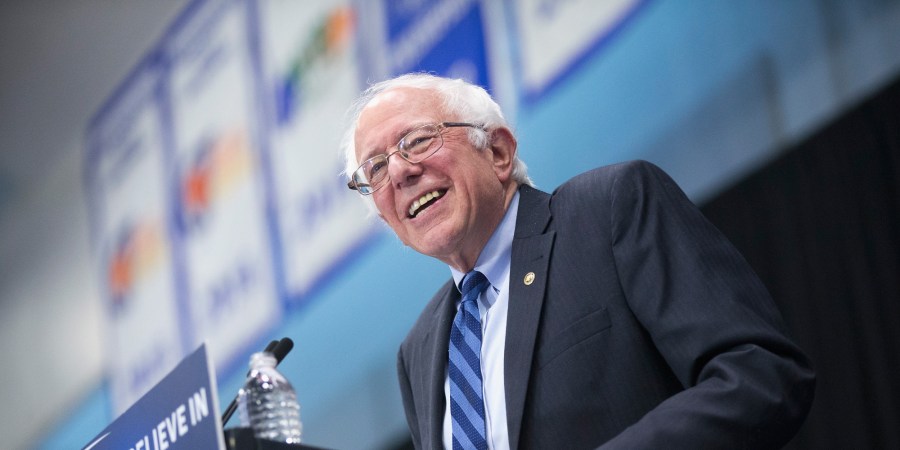
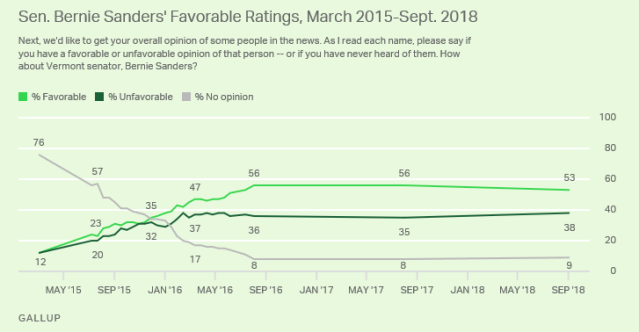
There is one presidential candidate, however, who is determined to transform the Democratic Party and the entire country along with it. That candidate is Senator Bernie Sanders. Senator Sanders has a much better shot at winning the Democratic nomination than Buttigieg does, and he has consistently fought for left-wing policies for decades. He wants to bring about a “political revolution against the billionaire class.” Why settle for President Buttigieg, when you could have President Sanders?


 They argue that Maduro is the rightful democratically elected president of Venezuela, and that any anti-democratic moves on Maduro’s part, like
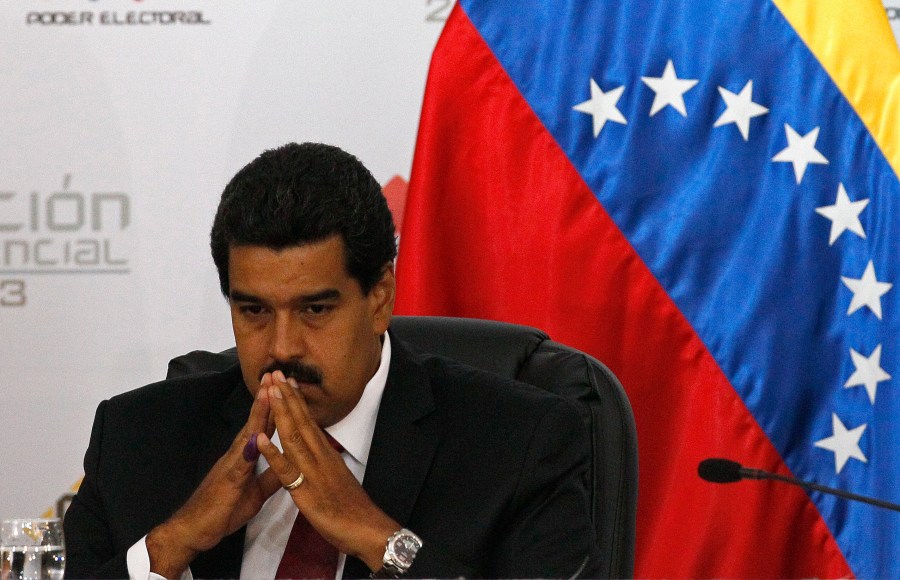
 Meanwhile, Venezuela’s president Nicolás Maduro has been sworn in for another six-year term. Last year’s presidential election was widely regarded as illegitimate by the international community because the main opposition coalition, the MUD, was
 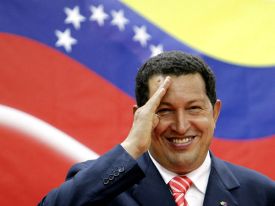 But things didn’t have to turn out this way. The first several years of Hugo Chávez’s presidency led to widespread prosperity and poverty relief for millions of Venezuelan citizens. Oil prices were high in the 2000s, and this allowed the government to fund generous social welfare programs from the proceeds of its state-owned oil company, PDVSA. The poverty rate was slashed from 55% in 1995 to 26% in 2009. Unemployment fell from 15% to 7.8%. The government was overwhelmingly popular, with Chávez winning re-election by a wide margin four times in elections that were certified as free and fair by international monitors.
 But while inflation has been a problem in Venezuela for a long time, the country had never before experienced the horrors of hyperinflation until recently. Hyperinflation is essentially a vicious feedback loop wherein high inflation rates cause people to try to exchange the domestic currency for a safe foreign currency, which pushes down the exchange rate, which in turn accelerates the inflation, in a downward spiral. During a period of hyperinflation, prices can sometimes double within just a few days or weeks. It’s a highly destabilizing phenomenon that hits the poor and the working class the hardest.
 In theory, Venezuela could try to adopt the currency of a foreign country other than the United States— say, China. Adopting the Chinese yuan would have a similar economic effect to dollarization, since the yuan is a much more stable currency than the bolivar, and its value is backed up by the trillions in US dollar reserves held by the People’s Bank of China. Since China wants to make allies with Latin American countries in order to undermine US hegemony, it might be willing to offer Venezuela much better terms on a currency deal than the United States, allowing Maduro to maintain most of the country’s social spending. In exchange, Maduro could offer to allow China to build military bases in Venezuela, which would increase Chinese power in the region and would protect Venezuela from potential US aggression.
 While my short-term predictions are pessimistic, this does not mean that there is nothing we can do to help the Venezuelan people. The Left should argue forcefully against US sanctions and military intervention into Venezuela, which will only make the current dire situation even worse. We should advocate for democratic norms and the rule of law, which have been greatly eroded under Maduro’s administration. The people of Venezuela must be able to choose their own leaders in free and fair elections, where all political parties are allowed to participate. And most importantly, the Left must work harder than ever to elect socialist candidates to Congress who can change US foreign policy toward developing countries like Venezuela. The United States could use its economic might to help poor countries through the process of diversifying and developing their economies, rather than simply leaving them on their own. Without a more compassionate US foreign policy, our international comrades will be severely constrained in their ability to pursue a left-wing agenda in their own countries. It’s time that the American Left took this responsibility seriously.

 Nora Belrose